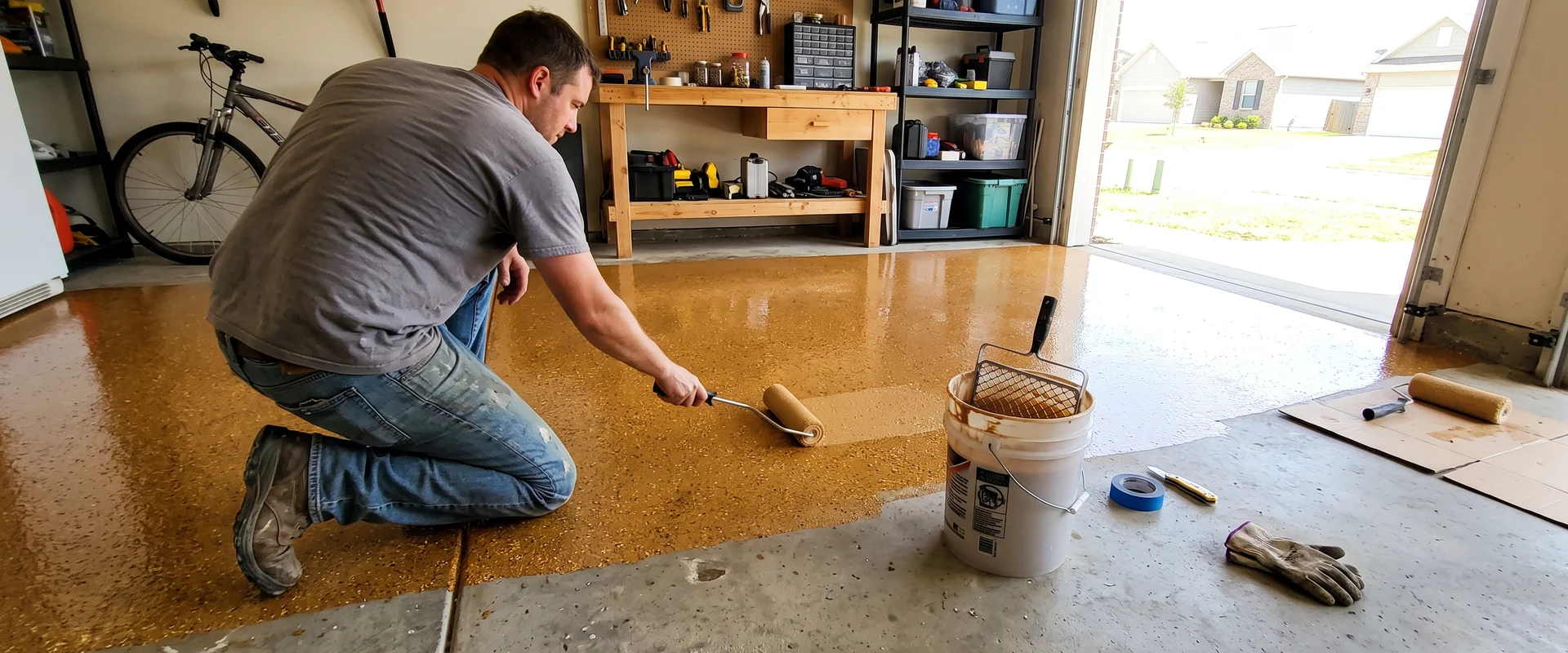
Why Fall Is the Best Time to Coat Your Garage Floor Before Winter
Road salt, wet tires, and freeze-thaw take a toll on bare concrete. Here's why fall is the ideal window to get a durable garage floor coating in Middle Tennessee.
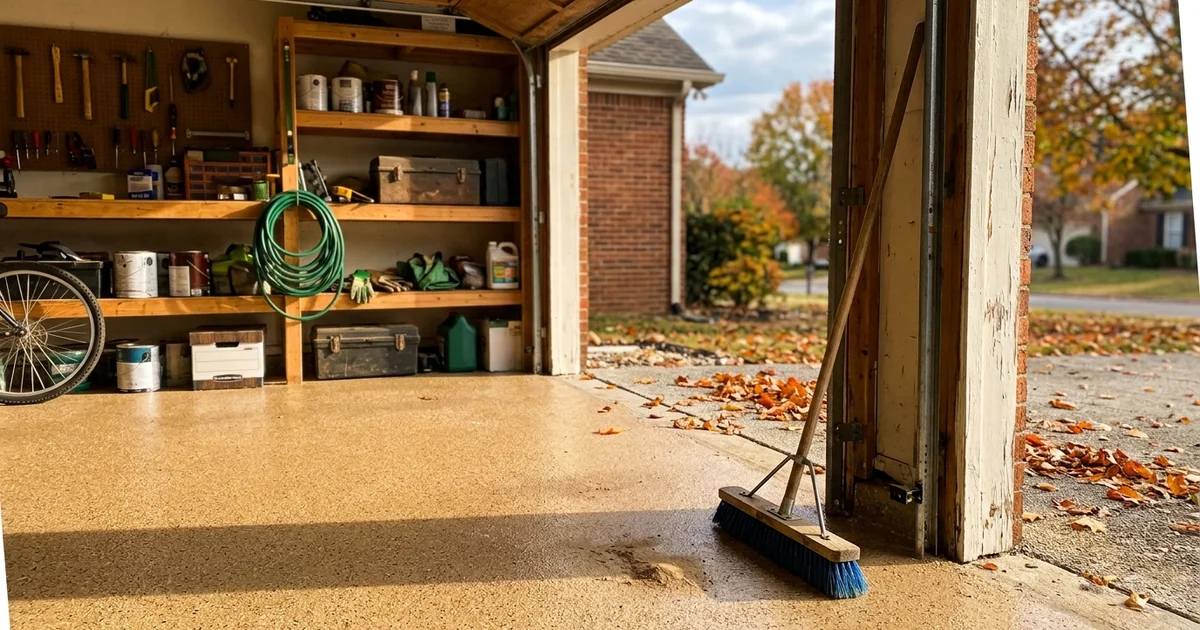
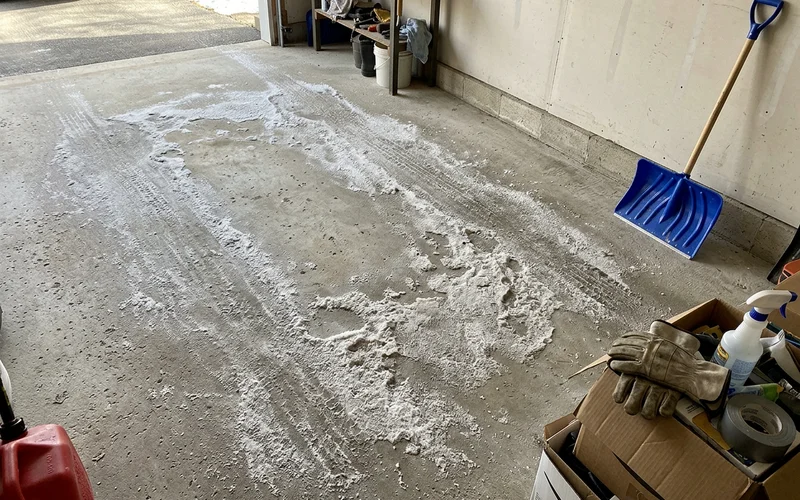
Every February we get the same call. A homeowner has spent three months watching brine drip off the car onto bare concrete, watched the salt dry into white crust, and finally decided the floor needs doing. Which is fine, except February is the hardest month of the year to schedule a coating in Middle Tennessee.
If you have been thinking about a garage floor, fall is the window. Here is why.
Coatings Need Temperature, and Fall Has It
Epoxy cures through a chemical reaction, and that reaction is temperature-dependent. We work in a controlled 55-80°F range. Below that, cure slows dramatically and the finish can end up soft, cloudy, or blotchy. Well above it, the pot life shortens and the material starts kicking off in the bucket before it is spread.
Middle Tennessee autumns sit almost perfectly in that band. Daytime highs through late September, October, and early November are mild, overnight lows are not yet dropping to freezing, and humidity has come off its summer peak. It is the stretch where we book most of our epoxy flooring work in Spring Hill, TN because conditions rarely fight the cure.
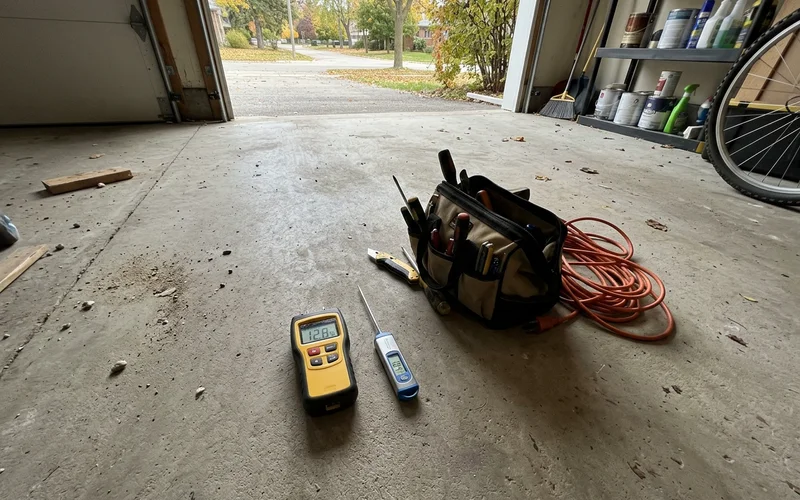
Compare that with a July install, where we start at seven in the morning to beat the heat, or a January one, where we are watching the forecast for a mild stretch and sometimes heating the space. Both are doable. Neither is as easy as October.
Salt Is the Real Enemy
Tennessee winters are not brutal, but the roads still get treated. Every time you drive home on a treated road, brine collects in the wheel wells and undercarriage and drips onto your garage floor overnight.
Bare concrete is porous. That salt solution soaks in, and when temperatures swing across freezing, the moisture inside those pores expands. Repeated over enough cycles, it lifts the top surface off the slab in flakes. That is the pitting and spalling you see near where the front tires sit.
A sealed floor stops the whole mechanism. Salt cannot penetrate a coated surface, so it sits on top where you can mop it off. The concrete underneath never gets wet, never freezes, and never spalls.
The compounding problem
Spalled concrete is more expensive to coat than sound concrete, because the damaged surface has to be rebuilt before anything goes down. Every winter you wait adds prep cost to next year’s quote.
Wet Tires and Winter Traction
The other seasonal issue is grip. A bare concrete garage floor with a wet car parked on it is genuinely slippery, particularly first thing in the morning when there is condensation on the slab.
A flake broadcast system adds texture as a side effect of how it is built: vinyl chips are broadcast into the wet base coat, then sealed under a clear topcoat, leaving a subtly grained surface. For households where someone is less steady on their feet, we can also add an aluminium oxide non-skid additive to the topcoat.
Scheduling Reality: Book Before the Rush
There is a practical reason to move in fall that has nothing to do with chemistry. Our calendar fills.
| Season | Typical booking situation |
|---|---|
| Spring | Busy — the annual home-projects surge |
| Summer | Steady, early starts to beat the heat |
| Fall | Ideal conditions, moderate demand |
| Winter | Weather-dependent scheduling, fewer usable days |
Late September through early November is the sweet spot: good conditions, and we can usually offer a start date within one to two weeks of the consultation rather than pushing into next month.
What the Install Week Looks Like
For a standard two-car garage, the whole thing is normally one working day. Everything comes out of the garage first, so the weekend before your date is the time to sort through what has accumulated. We arrive early, grind the slab under dust extraction, repair any cracks, lay the base coat and flake, and return to scrape and topcoat.
Foot traffic is usually fine the next morning. Vehicles go back on after the full cure, which we give you in writing because it depends on the topcoat and the temperature that week. Do it in October, and the floor is fully cured and ready well before the first treated road of the season.
If Your Slab Is Already Damaged
Not every floor is a straightforward coat. If yours already has pitting, spalling near the door, or flaking from previous winters, the surface has to be rebuilt before a coating goes down. That is normal work and we do it regularly, but it takes an extra day and adds to the price.
Which is really the argument for going now rather than next spring. Concrete damage does not pause over winter, and every freeze-thaw cycle makes the repair list slightly longer.
Want your garage sealed before the salt starts? — See our garage floor epoxy service
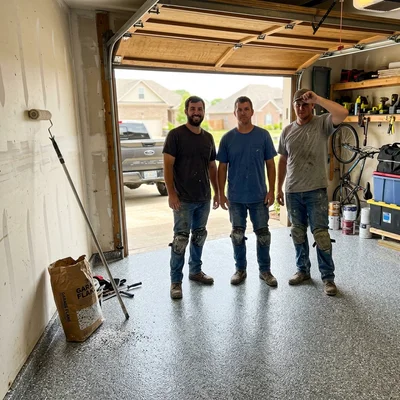
The Spring Hill Epoxy Team
Licensed Flooring & Resinous Coatings Contractor
The Spring Hill Epoxy team is a licensed, fully insured flooring contractor serving Spring Hill and the greater Middle Tennessee area. With over a decade of combined experience in concrete preparation and resinous coatings, the crew specializes in diamond-ground, 100% solid epoxy systems for residential, commercial, and industrial floors.
✓ Licensed Flooring Contractor · Fully Insured
More From the Job Site
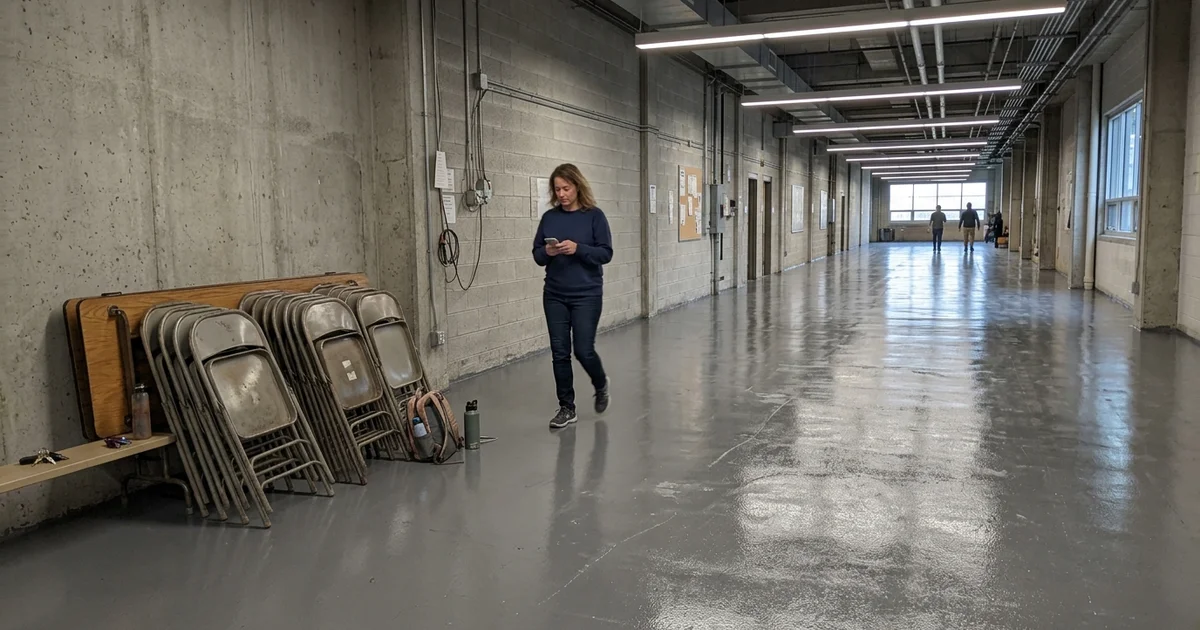 Case Study
 5,012 Sq Ft Commercial Floor Transformed in Just 5 Days
A look at how our crew ground, coated, and finished a 5,012 sq ft public building floor in five days without shutting the space down for long.
Read the story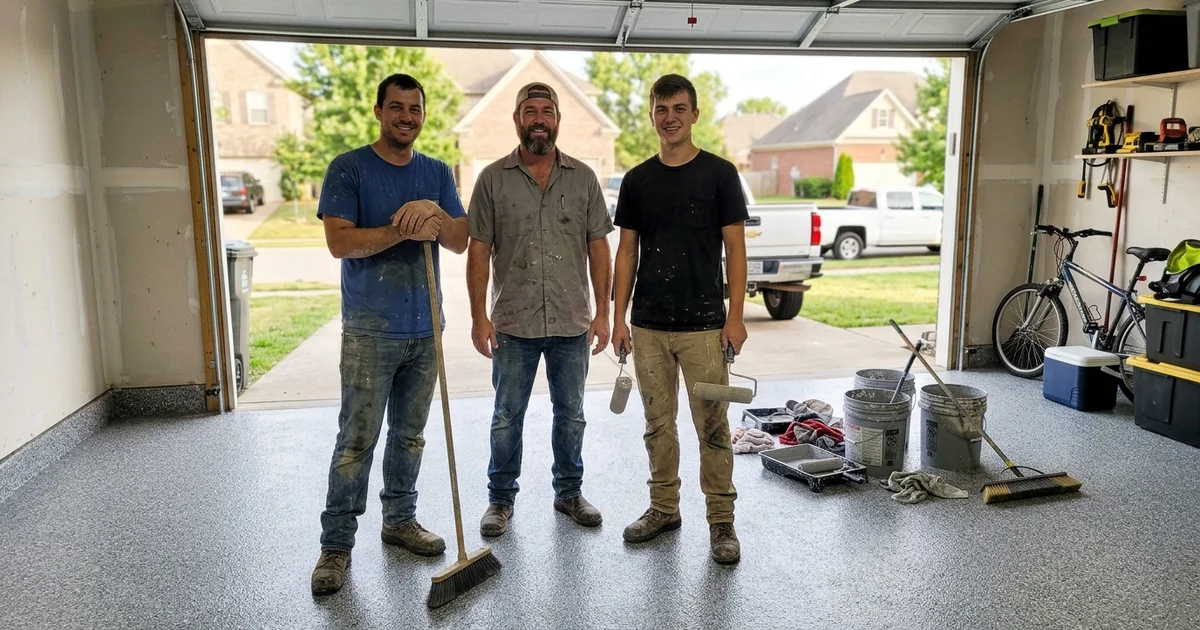 News
News Spring Hill Epoxy Passes 92 Five-Star Reviews Across Middle Tennessee
We're proud to cross 92 documented five-star reviews and stay ranked among the top local flooring contractors in the region heading into 2026.
Read the story