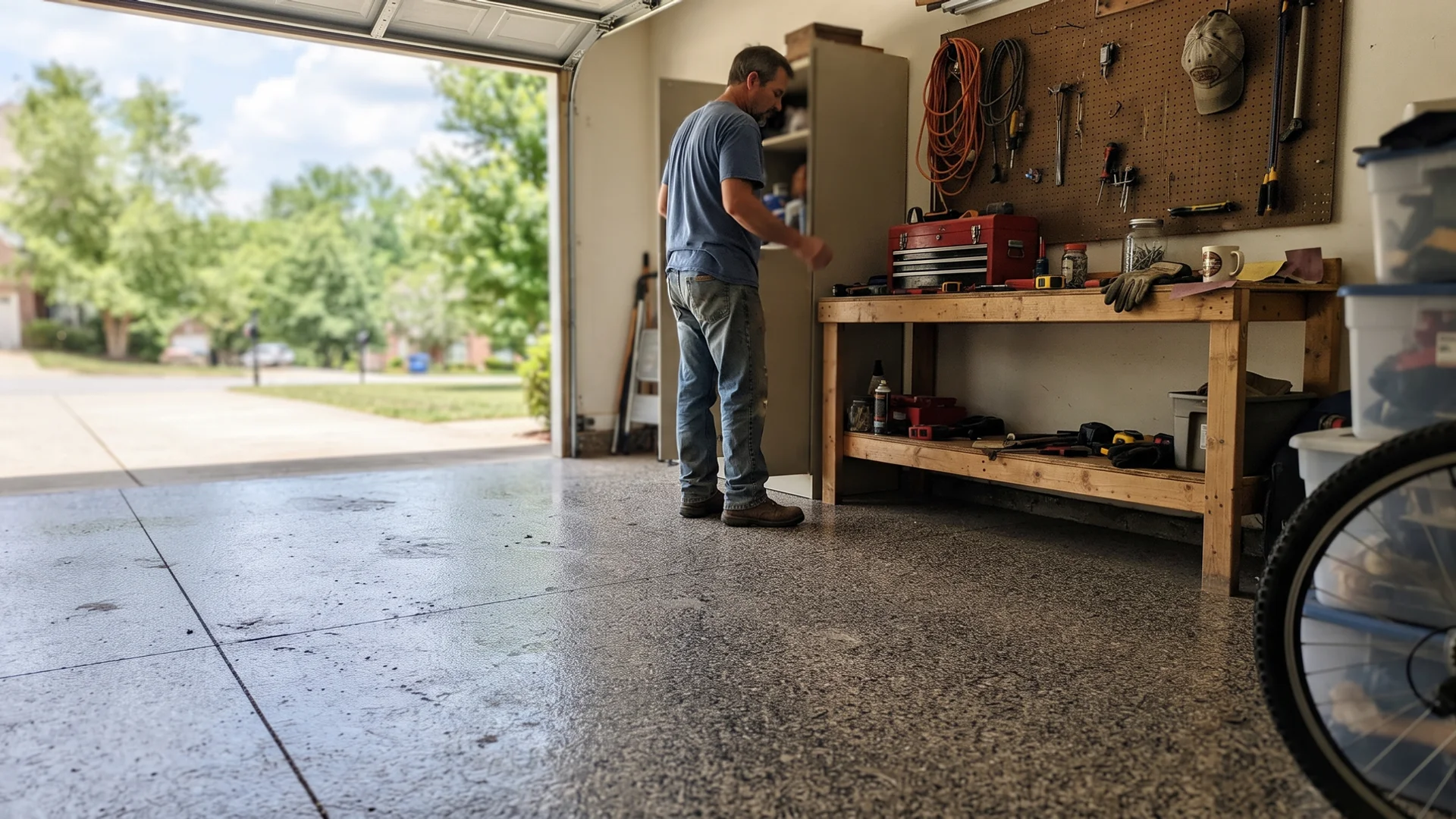
What Is Garage Floor Epoxy?
Are you tired of wondering if garage floor epoxy can fix your stained, cracked slab?
We have seen countless frustrated homeowners struggle with this exact problem. Replacing a badly damaged concrete slab in 2026 costs around $8 per square foot, which adds up quickly for a standard two-car space.
Our mission at Spring Hill Epoxy is to protect your property investment before the damage becomes irreversible. Garages are the most requested job in our epoxy flooring service in Spring Hill, TN, and most are finished in a single working day. You get a sealed, washable surface instead of a porous floor that soaks up every drop of oil.
The “100% solids” label matters far more than most people realize. Water-based and solvent-based paints act mostly as carriers that slowly evaporate as they cure.
Our 100% solids epoxy cures at exactly the thickness applied. A typical DIY water-based kit leaves a paper-thin 4-5 mil dry film because half the product evaporates into the air.
We apply a heavy-duty 10+ mil layer that actually survives heavy jack stands and vehicles parked in the exact same spots every night.
| Feature | 100% Solids Epoxy (Professional) | Water-Based Epoxy (DIY Kits) |
|---|---|---|
| Dry Film Thickness | 10-15+ mils (Thick and durable) | 4-5 mils (Paper-thin) |
| Evaporation Rate | Zero shrinkage during cure | Up to 50% evaporates |
| Hot-Tire Resistance | Excellent | Poor |
The second half of the durability equation is what happens directly under the resin. We mechanically grind the concrete to a CSP 2-3 surface profile to ensure maximum adhesion. This method is vastly superior to the weak acid etching found in hardware store kits.
Our diamond grinders open up the slab so the epoxy keys tightly into thousands of tiny anchors. Warm rubber grips a coating hard as the tires cool down in your garage. That intense mechanical bond prevents hot tires from pulling the epoxy straight off the concrete.
“A strong mechanical bond is the absolute secret to a garage floor that survives decades of heavy abuse without peeling.”
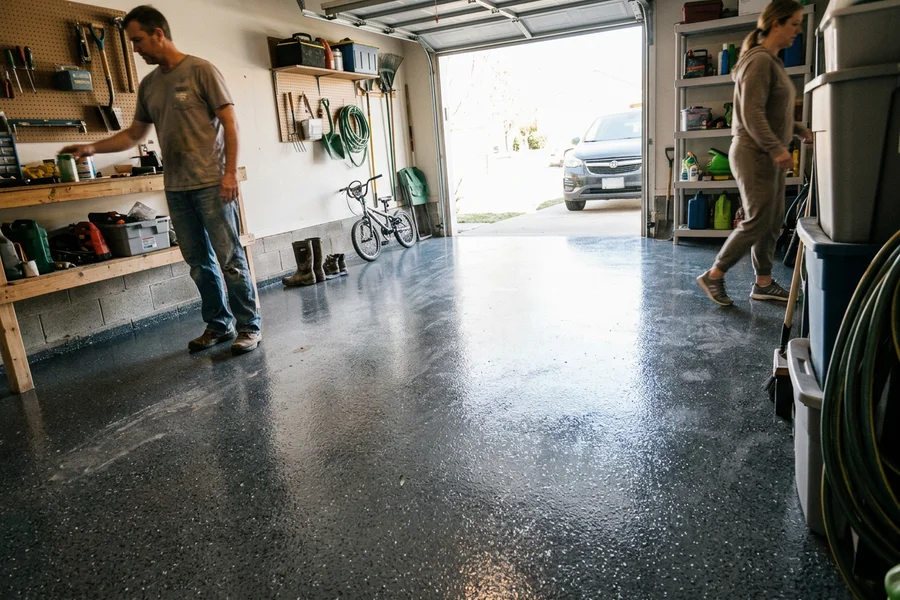
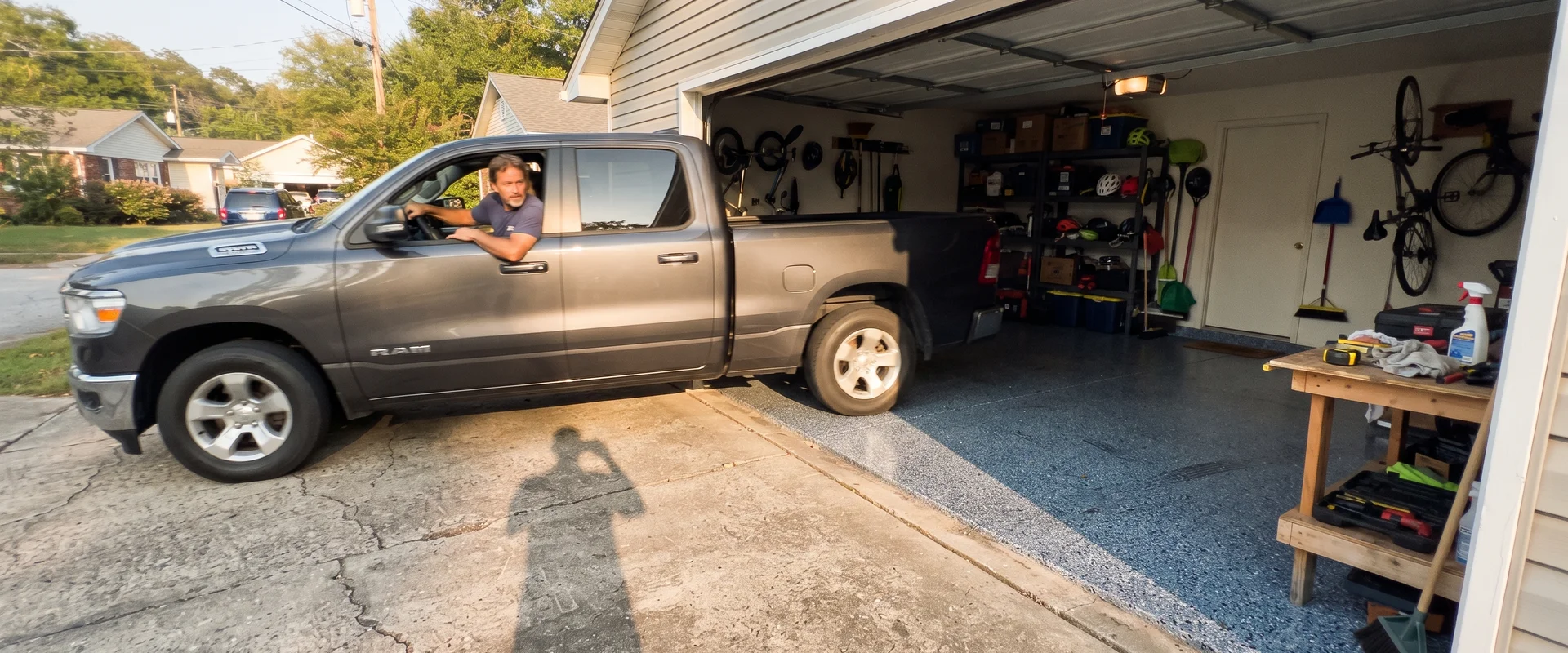
Most Spring Hill garages get the highly popular flake system. Polyvinyl acetate (PVA) decorative flakes are broadcast to rejection into the wet base coat.
Our installers then scrape the excess back and lock the color under a clear protective topcoat. The flake layer hides minor slab imperfections and adds much-needed texture underfoot. You also get to pick a custom color blend that complements your house rather than settling for plain grey.
Common Problems We Solve
It is incredibly frustrating to deal with a garage floor that looks terrible and requires constant cleaning. We encounter the same handful of structural and cosmetic issues every single week. Here are the most frequent challenges that a professional epoxy coating easily fixes.
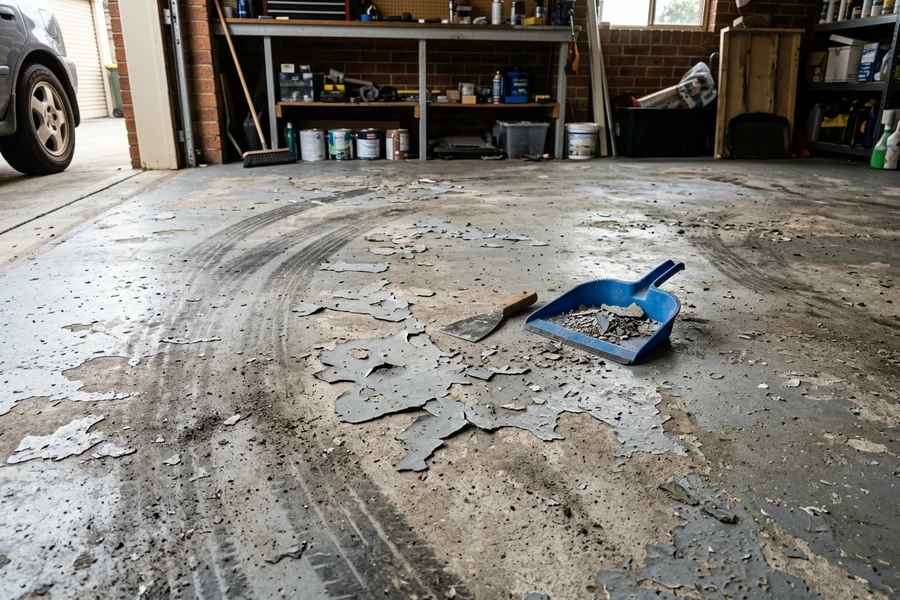
- Hot-tire pickup on DIY paint. This issue is the single most common call we get. Highway driving heats your tires well over 140°F. Our team frequently sees water-based kits soften under that intense heat. As the tire cools, it contracts and literally pulls bare patches of cheap paint straight off the slab. We grind all of the old coating off and rebuild the system properly.
- Dusting concrete. An uncoated slab constantly sheds fine cement dust onto tool chests, stored boxes, and car paint. Sealing it stops the dusting completely.
- Oil and fluid staining. Bare concrete is extremely porous and acts like a rigid sponge for every drip. Once coated, accidental spills sit right on the surface and wipe up fast with a simple rag.
- Road salt damage. Winter brine dripping off a vehicle attacks unsealed concrete and accelerates surface spalling. Many local public works departments use harsh chemicals like magnesium chloride to melt ice. Our sealed floors keep that corrosive salt off the vulnerable slab entirely.
- Uneven, patchy repairs. Older garages often have a patchwork of previous DIY fixes. Grinding levels those rough transitions before the coating goes down. The finished floor reads as one beautifully smooth, continuous surface.
What to Expect on Install Day
The actual installation process is straightforward and respectful of your schedule. We usually arrive between 7:30 and 8:30 in the morning. Getting an early start ensures the base coat has the warm part of the day to cure properly.
- Surface Preparation: Everything comes out of the garage first. Our crew runs diamond grinders under HEPA dust extraction, followed by a thorough vacuum and tack-clean.
- Coating Application: The base coat and flake broadcast happen together.
- Final Seal: We leave the floor to cure before returning to scrape, vacuum, and roll the fast-curing polyaspartic topcoat.
You will get clear walk-on and drive-on times in writing at handover. Most homeowners can safely walk on the new surface in 2 to 4 hours. Your vehicles can usually pull back into the garage after 24 hours.
Our team will also provide straightforward care instructions, which include sweeping the surface and mopping with a mild cleaner like Simple Green. You simply need to avoid dragging sharp steel across the floor. That is genuinely the entire maintenance routine, so reach out today to get your garage floor epoxy project started!