
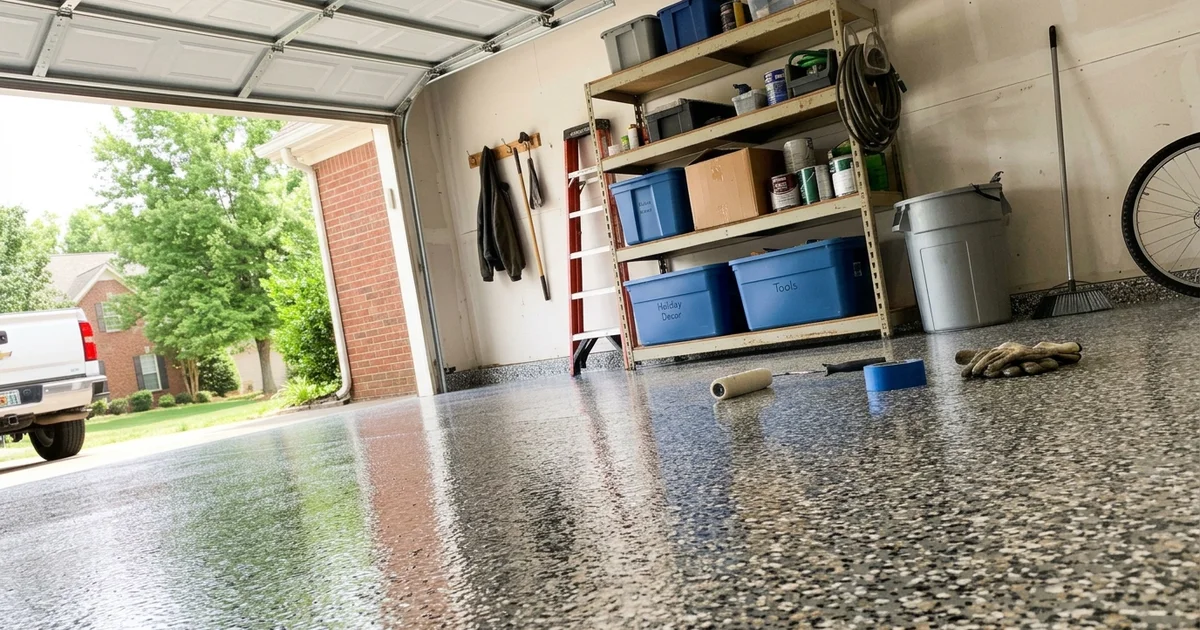
As the team at Spring Hill Epoxy, we get asked about pricing every single day. Figuring out the true epoxy flooring cost in Middle Tennessee should not feel like a guessing game.
Material prices and labor rates have shifted in 2026. It is very easy to find wildly different numbers online.
We want to cut through the noise and show you exactly what you are paying for. The data shows exactly how to budget for your space.
What Epoxy Flooring Actually Costs Around Here
Across Middle Tennessee, resinous floor coatings run $3.00 to $12.00 per square foot. That wide range exists for a very good reason. A plain solid-color coat on a clean warehouse slab requires totally different work than a hand-worked metallic pour in a showroom.
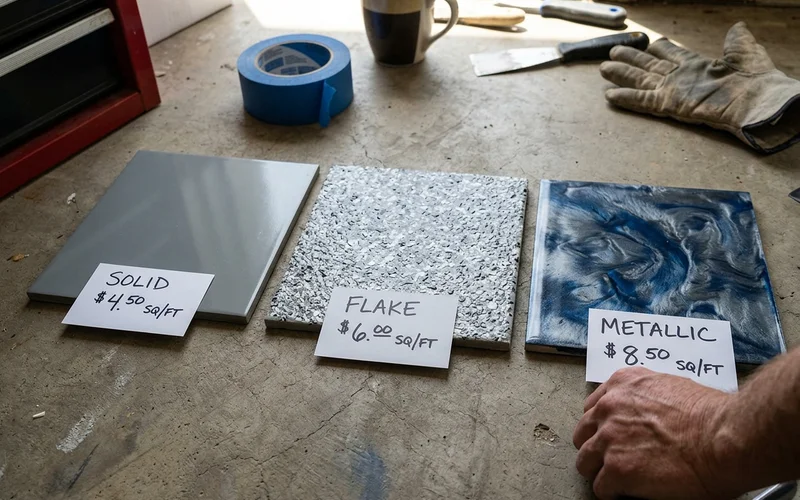
Our residential projects usually fall into a few predictable categories. A standard solid-color epoxy sits at $3 to $6 per square foot. A flake broadcast system, which is what most homeowners choose for a garage floor epoxy project, runs $5 to $9.
Metallic and decorative pours are $7 to $12 because of the pigment cost and specialized hand techniques involved. Heavy-duty commercial and industrial systems run $6 to $12 depending on the exact specification.
For a residential rule of thumb, a standard two-car garage of 400 to 500 square feet usually lands between $1,200 and $3,500 fully installed. A basement typically runs $1,500 to $4,000 depending on the footprint and moisture mitigation needs.
The honest version
Anyone quoting a firm price without seeing your slab is guessing. Preparation is the biggest variable. That prep work remains invisible until a professional looks closely at your concrete.
What Actually Moves Your Number
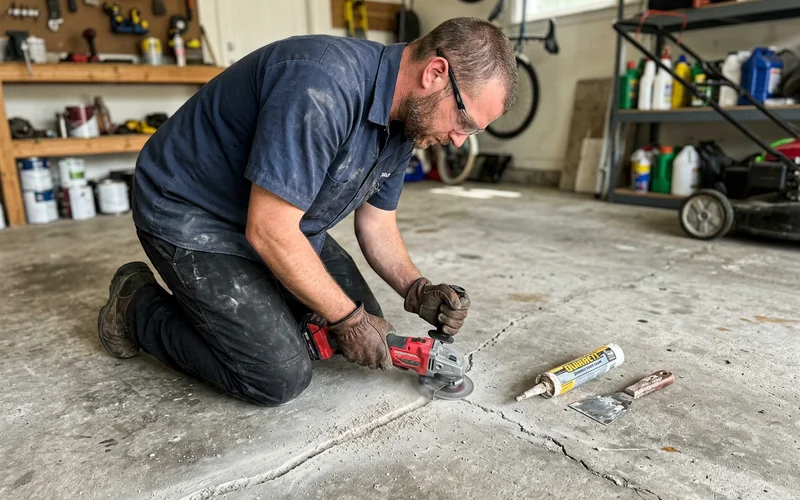
Slab condition and preparation dictate the final price more than any other factor. Grinding a sound slab is very straightforward. Chasing cracks, patching spalled areas, and removing an old failed coating will add hours before a drop of resin goes down.
Moisture and Surface Prep
We always check for hidden moisture issues before starting a job. Below-grade and newer slabs can carry enough vapor to literally push a coating off the floor. Industry standards like the ASTM F2170 relative humidity test give us exact readings.
High readings mean you need a specialized vapor-barrier primer. This step adds material cost and an extra day for curing.
Your chosen finish also plays a major role. Solid color sits at the bottom of the pricing tier. A full flake broadcast requires more material and a dedicated scrape-back day.
Size and Extras
Square footage dramatically changes the epoxy floor cost per square foot. Larger continuous areas price better per foot because setup and mobilization costs are fixed. This economy of scale explains why a 4,000 square foot commercial epoxy flooring job comes in much lower per foot than a single-car garage.
Topcoats and add-ons also factor into the final bill. A premium polyaspartic topcoat costs more upfront than standard clear epoxy. The polyaspartic cures faster and resists UV yellowing significantly better over time.
Non-slip aluminum oxide additives, cove base installations, and line striping are small items. They add up quickly on a specification sheet.
| System | Typical range | Best suited to |
|---|---|---|
| Solid colour epoxy | $3-$6 / sq ft | Workshops, storage, plain utility floors |
| Flake broadcast | $5-$9 / sq ft | Garages, basements, most residential work |
| Metallic decorative | $7-$12 / sq ft | Showrooms, living spaces, statement floors |
| Commercial / industrial | $6-$12 / sq ft | Warehouses, kitchens, healthcare, ESD rooms |
Why the Cheap Option Is Rarely the Cheap Option
A DIY garage kit costs around $150 to $300 and a weekend of your time. The main problem is not the cheap resin itself. The real issue is the surface preparation.
Hardware store kits instruct you to acid-etch the concrete. The International Concrete Repair Institute states that acid etching only creates a Concrete Surface Profile (CSP) of 1 or 2.
A professional epoxy system requires a CSP of 2 to 3 for a true mechanical bond. The water-based coating in those kits also loses thickness as the water evaporates during the cure.
The result is highly predictable for a few specific reasons:
- Warm car tires grip the thin film harder than the film grips the slab.
- Bare concrete patches form quickly exactly where your tires park.
- Moisture vapor easily blisters the weak chemical bond.
Our installation teams spend countless hours grinding off these failed DIY kits. Removing peeling paint costs more than doing the job correctly the first time. Our breakdown of epoxy flooring vs concrete paint walks through the chemistry behind why those kits fail. If your slab is in good shape and you just need dust-proofing, a basic solid-color system does that job perfectly well without breaking the bank.
What a Quote Should Actually Tell You
A one-line total tells you almost nothing about the quality of the floor. When you compare two quotes side by side, look for four specific details. These line items explain exactly what the epoxy flooring price Tennessee contractors charge actually includes.
Key Quote Details
- Prep method: Does the quote specify planetary diamond grinding or a basic acid etch? This single line separates a floor that lasts ten years from one that peels up in two summers.
- Solids content: Is the base coat 100% solids or a watered-down product? Ask the contractor directly.
- Topcoat material: Will they use a standard clear epoxy or a premium polyaspartic? The topcoat absorbs all the abrasion, chemical spills, and sunlight hitting the floor.
- Exclusions: What happens if they find unexpected cracks? Crack repair, spall patching, moisture mitigation, and old coating removal are frequently left off cheap quotes.
We see vague estimates confuse homeowners constantly. Two quotes that both say “$1,900 for a two-car garage” can describe completely different installations. Reading the itemized details line by line is the only way to protect your investment.
Commercial and Industrial Budgets
Commercial pricing follows the same per-square-foot logic but with totally different operational variables. A straightforward warehouse build coat sits at the bottom of the range. The area is massive and continuous, so setup costs spread out thinly.
A wash-down commercial kitchen sits at the very top of the scale. Urethane cement systems like Ucrete cost significantly more than standard epoxy.
Integral cove base is tedious, hand-detailed work. The non-slip broadcast must also be graded exactly to the safety requirements of the environment.
The Cost of Downtime
Facility downtime is a massive financial lever. Coating a facility overnight or across a weekend avoids shutting down production.
This off-hours schedule definitely costs more in labor than a straight weekday run. Most facility managers find that trade-off highly profitable.
Our commercial estimators always price these jobs both ways. This gives you clear options before making a final operational decision.
Final Steps for Your Flooring Project
Every successful project starts with a proper on-site evaluation. We measure the space, check for hidden moisture, and note the exact repairs your slab requires.
You receive an itemized written price so you understand your true epoxy flooring cost in Middle Tennessee. Contact Spring Hill Epoxy today to schedule your free concrete assessment and get your space upgraded.