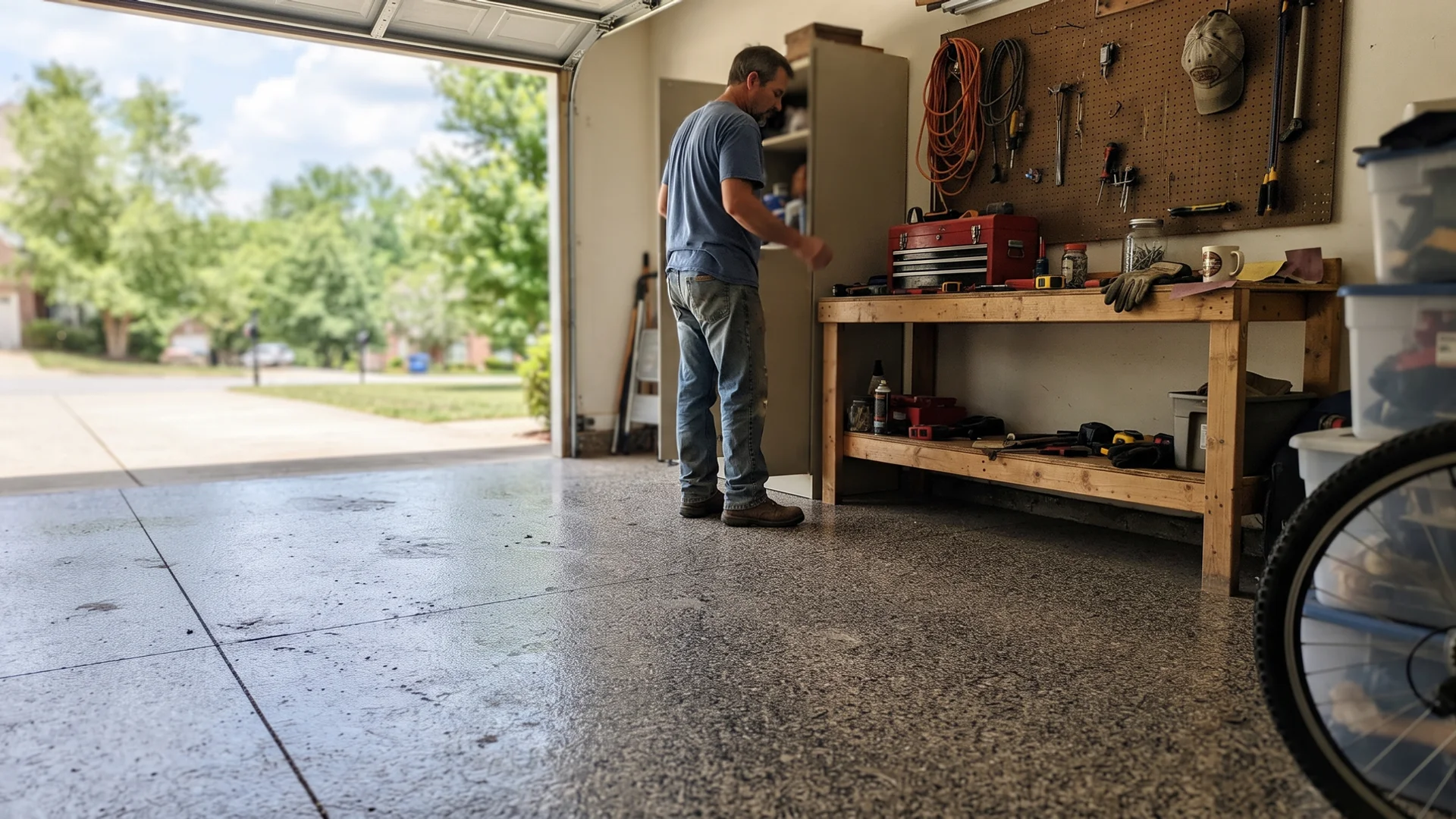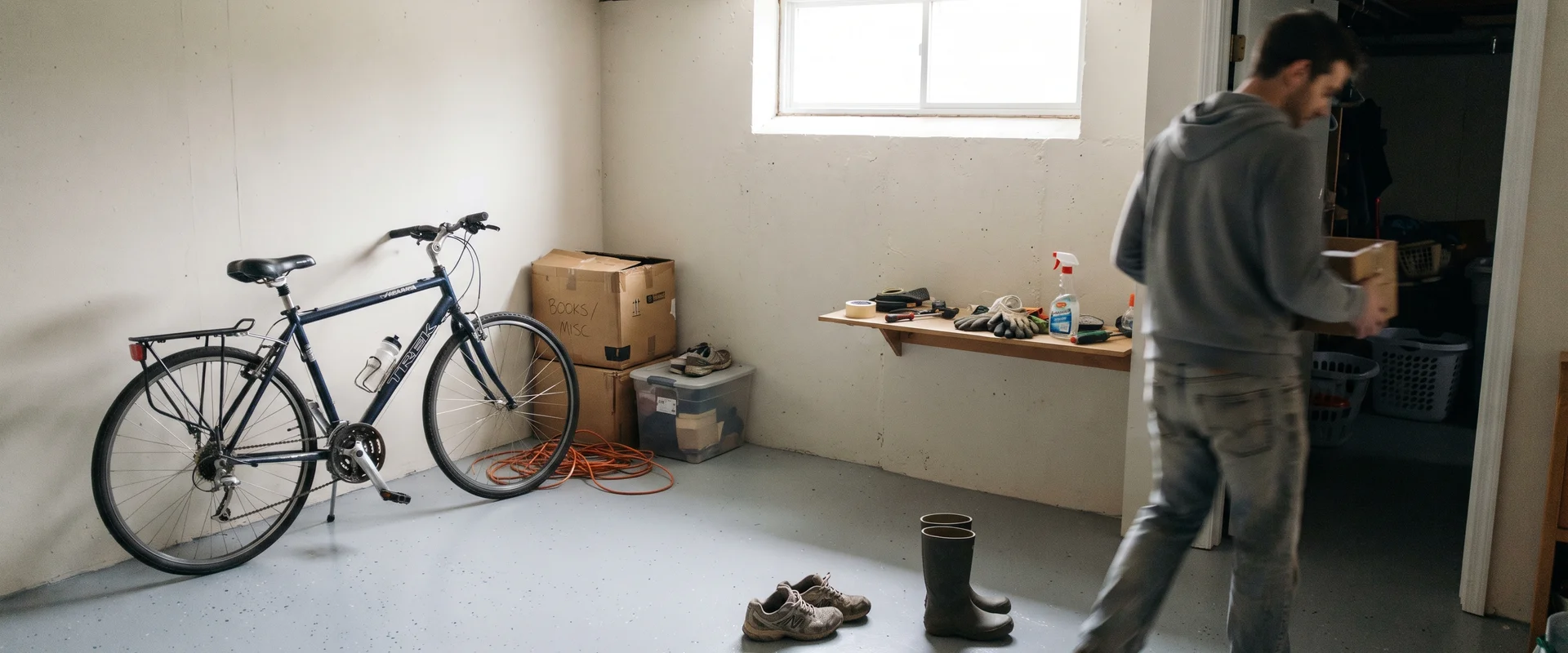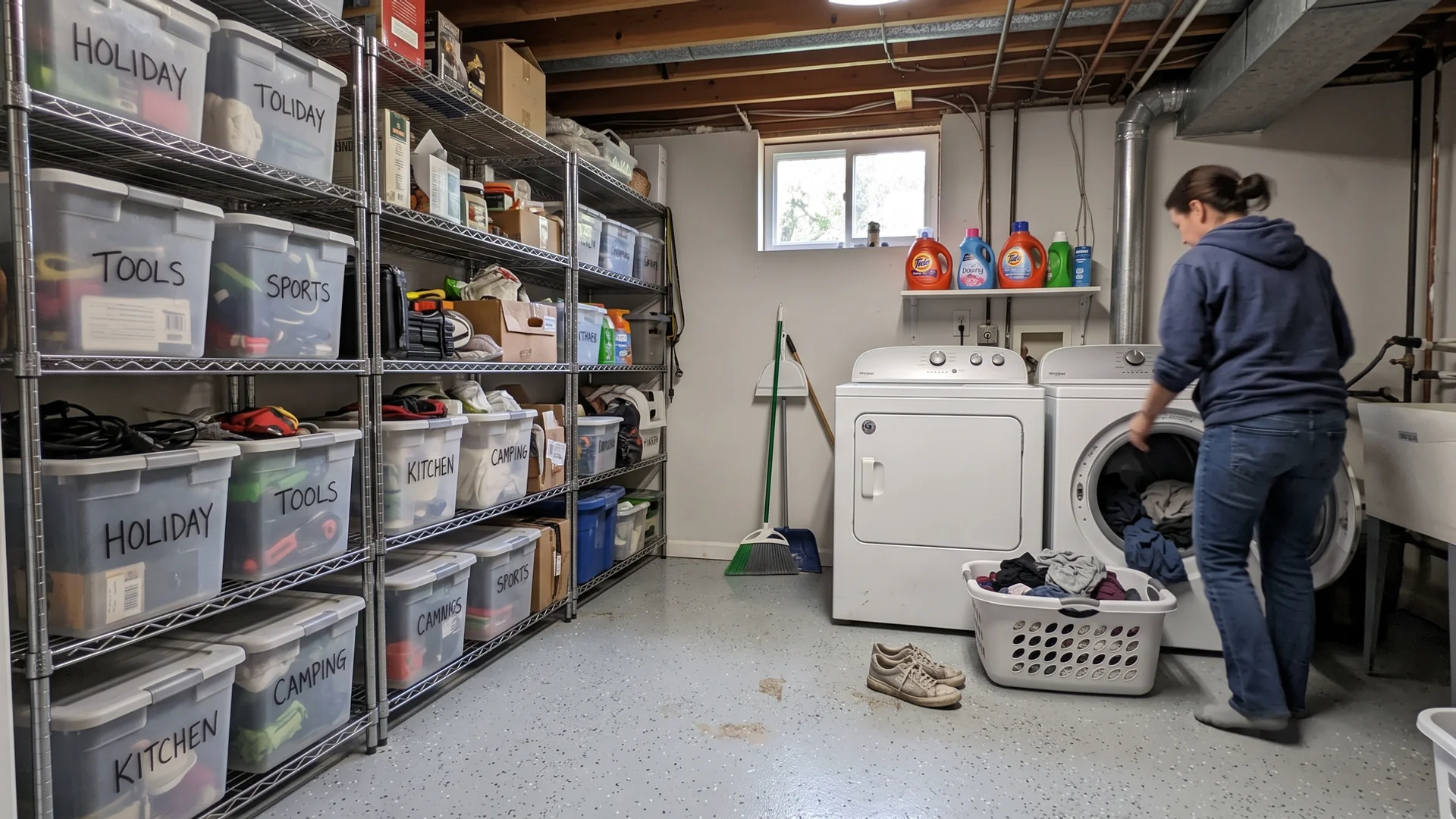
Finished light grey epoxy basement floor in a Middle Tennessee home

Seal & Finish Your Basement Slab With Epoxy

Moisture-sealing epoxy that keeps below-grade concrete dry and easy to clean.

Licensed & fully insured 5.0 from 92+ reviews Free on-site consultation
Call (615) 908-2144 Get a Free Quote From $1,500 per basement (footprint-dependent)
5.0 (92+ Google reviews)
Licensed & Fully Insured
Free On-Site Consultation
500+ floors coated

Have you ever walked down into your basement and immediately noticed that damp, musty scent?

That familiar smell usually means moisture is hiding right under your feet. Upgrading your space with Basement Floor Epoxy is a brilliant way to transform a humid storage area into a room your family will actually love.

At Spring Hill Epoxy, our team is dedicated to providing high-quality flooring contractor services that prioritize customer satisfaction and long-term durability. Basements are one part of our wider epoxy flooring service in Spring Hill, TN, so the same prep standards apply below grade as in any garage. We are going to walk you through the exact steps required to create a beautiful, waterproof surface.

You will discover the real costs, common pitfalls, and the simple tricks that make a massive difference. Grab a cup of coffee, and we can go through it together.

What Is Basement Floor Epoxy?

Basement floor epoxy is a thick resin system installed directly over a below-grade concrete slab. This treatment seals the porous concrete, brightens the room, and makes cleaning incredibly easy. The finished surface becomes one continuous membrane with no grout lines, zero seams, and absolutely nowhere for dampness to hide.

Our team knows that finishing this lower level is a huge step for most Middle Tennessee homeowners. A fully finished basement returns about 70% to 75% of its cost in added home equity at resale, according to recent 2026 housing market data. You want to protect that investment with a floor that will not peel or bubble.

Below-grade slabs are entirely different from standard garage floors, primarily because of constant groundwater exposure. The soil around and beneath your foundation holds moisture, pushing it upward through the concrete under hydrostatic pressure. You often see the evidence long before standing water appears, like a white chalky bloom of efflorescence along the footing line.

The Importance of Moisture Testing

We test every single floor before we provide a quote. A standard calcium chloride moisture test (ASTM F1869) or an in-situ relative humidity probe (ASTM F2170) tells us exactly how much vapor is moving through your slab. The concrete must emit less than 3 pounds of moisture per 1,000 square feet per 24 hours to be safe for a standard coating.

If your numbers come back higher than that threshold, we apply a moisture vapor barrier primer first. This primer gives the final epoxy a stable, bone-dry substrate to bond to. Skipping this crucial preparation step is the reason nearly 90% of DIY epoxy kits end up bubbling and lifting within a single year.

Our installers use 100% solids epoxy to give you a professional, commercial-grade finish. Store-bought DIY kits typically dry to a very thin 1 to 2 mils in thickness. We apply our professional resins at 15 to 30 mils thick, giving you a significantly tougher surface that can handle dropped tools and heavy furniture.

Choosing Your Finished Look

Once the slab is prepared and primed, the final look is completely up to you. A single-color epoxy provides a clean, bright, and utilitarian surface that suits a home gym or a workshop perfectly. Many suburban homeowners prefer a decorative flake broadcast instead.

This flake layer adds great traction and hides minor concrete imperfections beautifully. We can also install a stunning metallic pour to turn your basement into the most striking room in the house. Every single option ends with a clear polyaspartic topcoat.

This final protective layer seals the entire system into a genuinely impermeable membrane that resists scratches and stains. Let’s compare the most popular choices so you can decide what fits your budget. Professional epoxy flooring costs in the US currently average between $3 and $12 per square foot.

Finish TypeAverage 2026 Cost (Per Sq. Ft.)Best Room Use
Solid Color Epoxy$3.00 to $5.00Utility rooms, basic storage
Decorative Flake$4.00 to $7.00Home gyms, playrooms, workshops
Metallic Pour$8.00 to $12.00Entertainment spaces, man caves

Our clients usually find that seeing the numbers side-by-side makes the decision much easier.

Common Problems We Solve

We handle a variety of frustrating basement issues that typical flooring options simply cannot fix. The American Society of Home Inspectors estimates that over 60% of US homes suffer from wet basements. Fixing the floor addresses several of these major headaches at once.

  • Musty, damp-smelling rooms. Sealing the slab cuts off the exact moisture path that feeds the smell, and removing your old carpet and padding eliminates the materials holding that odor.
  • Efflorescence and chalky staining. This white bloom is actually mineral salt carried up by evaporating moisture. A barrier primer stops it from recurring under your finished floor.
  • Carpet and tile that keep failing. Traditional carpet pads rot, tack strips rust, and tile grout eventually lifts in damp environments. A bonded resin coating eliminates all of those traditional failure points.
  • Dust from a bare slab. Unsealed basement concrete constantly sheds a fine silica dust onto everything stored down there. A professional seal puts an immediate end to the mess.
  • Cold, unwelcoming space. A bright, reflective floor makes an enormous difference to how a low-light room feels. Lighter greys and creams bounce your overhead lighting around to make the space feel much larger.

When a Coating Is Not the Right Answer

We will always tell you straight away if an epoxy coating is the wrong choice for your home. Active water intrusion through a wall crack, a failed footing drain, or a struggling sump pump all need immediate addressing before any resin goes down. A floor system only seals the horizontal slab, not your vertical foundation walls.

Our priority is making sure your investment is completely protected. If your basement regularly floods during heavy spring rains, you should hire a plumber to upgrade your drainage first. Installing a heavy-duty, cast-iron unit like the Zoeller M53 Mighty-Mate sump pump costs around $225 plus installation, and it will save your entire basement from disaster.

Being honest about these water issues up front is significantly cheaper for you than finding out after the resin has already cured. We want your new floor to last a lifetime, and proper foundation preparation is the only way to make that happen. Your peace of mind is always worth the extra effort.

Ready to Transform Your Basement?

You deserve a basement that feels like a natural extension of your living space. Replacing that dusty, damp concrete with a durable epoxy floor is the best way to get there.

We are always ready to answer your questions and help you plan the perfect project. Give us a call today to schedule your free moisture test and consultation.
Transparent pricing

How Much Does Basement Floors Cost?

Basement projects usually run $1,500 to $4,000. Footprint and moisture conditions are the two things that move the number most.

Standard Seal

Dry slab, single-colour finish

$1,500-$2,200
per basement (footprint-dependent)
  • Moisture testing before quoting
  • Diamond grinding prep
  • 100% solids epoxy in your colour
  • Clear protective topcoat
Get an exact price
Most popular

Moisture-Mitigated

For slabs with elevated readings

$2,200-$3,200
per basement (footprint-dependent)
  • Everything in standard seal
  • Moisture vapor barrier primer
  • Crack and cold-joint treatment
  • Flake or solid colour finish
Get an exact price

Full Living Space

Large or finished basements

$3,200-$4,000
per basement (footprint-dependent)
  • Everything in moisture-mitigated
  • Self-levelling underlayment where needed
  • Decorative flake or metallic upgrade
  • Low-VOC formulation for occupied homes
Get an exact price

What Moves the Price Up or Down

Factor Effect on your quote
Moisture readings Elevated results call for a vapor-barrier primer, which adds material and a cure day
Slab flatness Badly out-of-level slabs may need a self-levelling underlayment first
Footprint Priced by square footage once prep needs are known
Existing floor covering Old carpet glue, tile mortar, or tack strips have to be ground off
Finish choice Solid colour is lowest, flake mid, metallic highest

Every price is confirmed after a free on-site look at your slab. Book a free consultation.

The difference

Why Choose Us for Basement Floors?

We test before we quote

Coating a wet slab is the fastest way to get a bubbled, delaminating floor. Moisture testing takes an extra visit step and saves the whole project.

Built for hydrostatic pressure

Below-grade concrete pushes moisture up from the soil. A penetrating vapor-barrier primer manages that head pressure instead of pretending it is not there.

Cleaner than carpet or tile

No grout lines, no fibres, no pad to hold damp. The finished surface is seamless, so a mop is genuinely all it takes.

Honest about what won't work

If a slab has active water intrusion, we will tell you it needs drainage or waterproofing work before a coating, rather than taking the job and hoping.

Low-VOC options

Basements are enclosed. We can specify a low-VOC formulation so the house is comfortable to be in while the floor cures.

Finished, usable space

A sealed floor is what turns a storage basement into a gym, playroom, or workshop. It is the cheapest square footage you will ever add.

How Spring Hill Epoxy Compares

Feature Typical provider Spring Hill Epoxy
Moisture assessment Visual check only ASTM F1869 or F2170 testing
Primer Standard primer regardless of readings Vapor-barrier primer when readings require it
Surface Tile with grout lines or carpet Seamless impermeable membrane
Cleaning Grout scrubbing, carpet shampooing Sweep and mop
Honest scoping Coat first, deal with problems later Drainage issues flagged before we quote
Step by step

How Our Basement Floors Install Works

  1. 1

    Moisture test first

    We run a calcium chloride moisture test (ASTM F1869) or an in-situ relative humidity probe (ASTM F2170) so the primer choice is based on data rather than a guess.

  2. 2

    Strip and grind

    Old carpet glue, tile mortar, and tack strips come off. The slab is diamond-ground to an open profile, and cold joints and cracks are treated.

  3. 3

    Vapor barrier and base

    Where readings call for it, a moisture vapor barrier primer goes down first. Then the 100% solids epoxy base coat, in your colour, with flake if you want it.

  4. 4

    Topcoat and dry-out

    The clear topcoat seals everything into one impermeable membrane. We give you cure times in writing and talk through humidity control for the room.

See the Difference

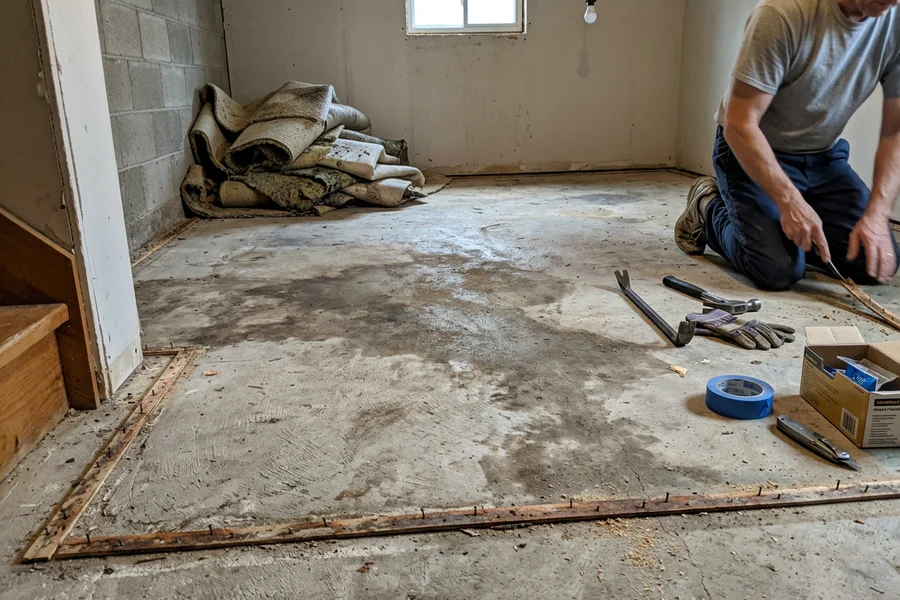
Before: Basement Floors transformation Before
Bare, stained slab as we found it.
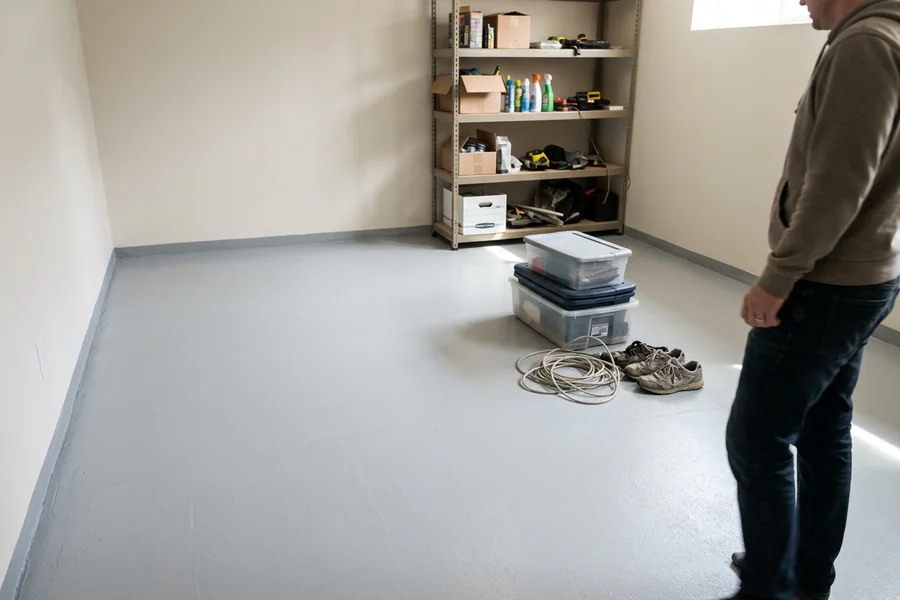
After: Basement Floors transformation After
Diamond-ground, coated, and topcoated.
Reviews

What Customers Say About Our Basement Floors

5.0 out of 5 from 92+ reviews
"Our basement always felt damp. They moisture-tested first, sealed it, and now it's dry and wipes clean in seconds. Honest pricing with no surprises."
Karen S.
Franklin
"Two other companies quoted over the phone. These guys actually came out, tested the slab, and explained why the primer mattered. The floor has been perfect."
Bill D.
Columbia
"We pulled up old carpet that smelled musty no matter what we did. Sealed slab, light grey finish, and the room finally feels like part of the house."
Nina and Rob T.
Thompson's Station
Got questions?

Basement Floors FAQs

Can you epoxy a damp basement floor?
In most cases, yes. We moisture-test the slab first, then apply the correct vapor-barrier primer to manage hydrostatic pressure before the epoxy goes down. If a slab has active water intrusion, we will tell you honestly what needs sorting before coating.
How do you test for moisture?
Either a calcium chloride moisture test (ASTM F1869), which measures vapor emission from the surface, or an in-situ relative humidity probe (ASTM F2170), which reads conditions inside the slab. The probe is more reliable on below-grade concrete, so it is our usual choice.
What does a basement epoxy floor cost?
Typically $1,500 to $4,000 depending on footprint and moisture conditions. A dry, sound slab at the small end of the range sits near $1,500, while a large basement needing vapor mitigation and levelling approaches $4,000.
Is epoxy better than carpet or tile down there?
For a below-grade room, usually yes. Carpet and its pad hold moisture and odour, and tile has grout lines that trap dirt and can lift when the slab moves. Epoxy is seamless, impermeable, and cleans with a mop.
Will it stop water coming through the walls?
No, and nobody should tell you otherwise. A floor coating seals the slab, not the walls or the footing. If you have wall seepage we will point you toward drainage or waterproofing work first.
What is that white powder on my basement floor?
Efflorescence: mineral salts left behind as moisture moves through the concrete and evaporates. It is a signal that vapor is passing through the slab, which is exactly why we test and specify a barrier primer.
Does an epoxy floor help with radon?
It is not a substitute for a proper radon mitigation system. But sealing the slab into one continuous membrane closes off the cracks and cold joints that radon and moisture both use to get into the room. If you already have a radon barrier and sump system in place, our coating goes over the top of it without interfering.
How long does a basement floor take?
Usually one to two days of work, spread across two or three visits because primer and coats need 10 to 24 hours of cure between them. Larger basements with levelling work take longer.
Will the fumes be a problem while it cures?
We can specify a low-VOC formulation for occupied homes, and we ventilate while working. Most families stay in the house without issue, though we usually suggest keeping the basement door closed on coating day.
Can I get flake or a colour instead of plain grey?
Yes. Basements take flake blends and metallic finishes just as well as garages. Lighter colours are popular below grade because they bounce what natural light there is around the room.

Still have a question?

Call and talk to the crew that will actually be on your slab. We'll give you a straight answer.

(615) 908-2144
Now booking across Williamson, Maury & Davidson counties

Ready to Book Basement Floors?

Free on-site consultation and a written price for your basement floor epoxy project.

Licensed & fully insured Transparent, itemised pricing Diamond-ground prep on every job
Free Quote