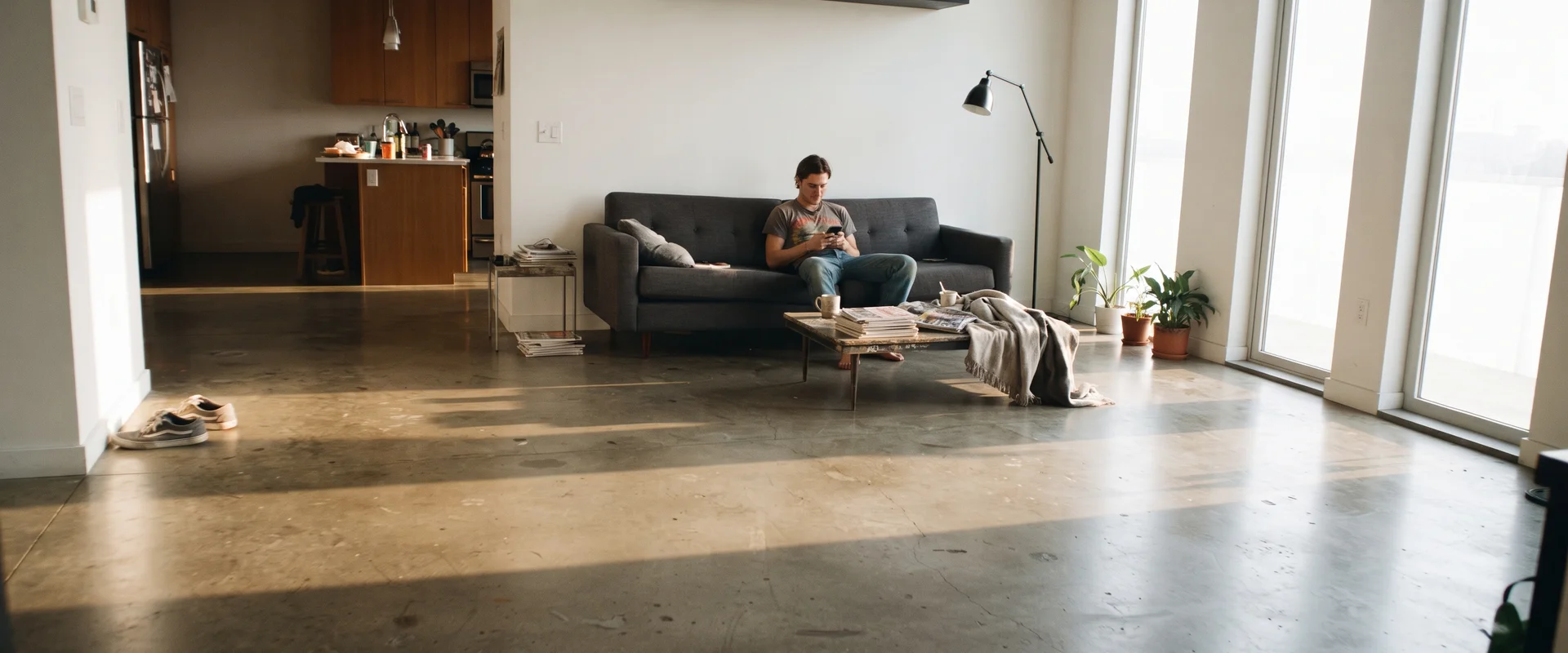
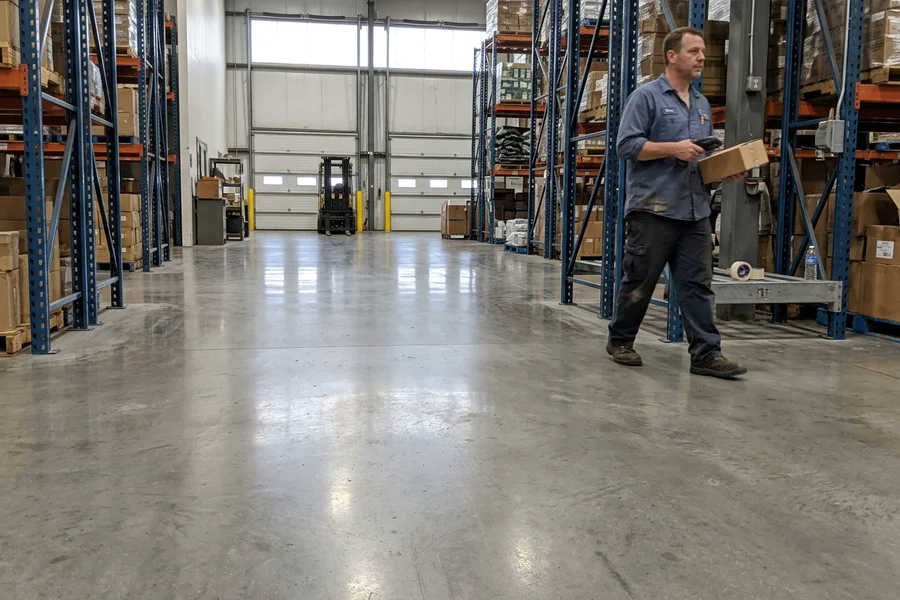
Polished concrete floor in an open-plan retail space with a satin sheen

Polished Concrete Floors: No Coating Required

Mechanical grind-to-gloss concrete with no applied coating, durable and low-maintenance.

Licensed & fully insured 5.0 from 92+ reviews Free on-site consultation
5.0 (92+ Google reviews)
Licensed & Fully Insured
Free On-Site Consultation
500+ floors coated

What Is Concrete Polishing?

Have you ever looked at your dull, dusty garage floor and wished it could look like a high-end showroom? Many suburban homeowners are discovering that concrete polishing is the secret to a beautiful space, hiding right beneath their feet.

Our team at Spring Hill Epoxy is dedicated to providing high-quality flooring contractor services that prioritize your long-term satisfaction. Polishing sits alongside the coating systems in our epoxy flooring service in Spring Hill, TN, and it runs on the same grinders. That original concrete slab holds incredible potential.

Concrete polishing is a permanent mechanical process, not just a temporary coating. We use a planetary grinder fitted with progressively finer diamond abrasives to cut the surface of your existing slab perfectly flat. This step removes stains and imperfections.

“A polished floor has no film to lift, chip, or delaminate because there is nothing sitting on top of the concrete.”

Our crew then hardens the floor with a specialized concrete densifier before refining it through a series of passes. You simply choose the final gloss level, and what you walk on afterwards is the actual concrete itself.

That distinction is the entire appeal. Every applied coating is simply a layer bonded to the slab, and every bonded layer has a theoretical failure point.

We know that busy households want to skip the constant maintenance cycle, and this durability is often the deciding factor. The benefits of choosing this method are clear:

  • Zero Peeling: Because there is no topical sealer, hot car tires will never lift the finish.
  • Easy Cleaning: A simple dust mop keeps the floor looking brand new.
  • Eco-Friendly: Utilizing your existing slab reduces the need for new materials or harsh chemicals.

The densifier step is what makes this magic work. Our standard practice involves using a lithium silicate densifier for residential projects in 2026.

This modern liquid hardener features nano-sized molecules that penetrate much deeper into the slab than older sodium silicate versions. We rely on this chemical reaction with free lime in the concrete to fill the pore structure and harden the surface from within.

Without this crucial step, a polished slab would dull quickly under daily family traffic.

“With a high-quality lithium silicate densifier, the surface holds a bright, burnished finish for years.”

Gloss level and aggregate exposure are the two main choices you get to make. Our polishing process can deliver a simple cream finish that keeps the surface as-cast and gives a soft satin glow.

Cutting slightly deeper produces the familiar salt-and-pepper look where fine sand shows through. We can even go deeper to expose the larger stones mixed into the original pour.

Each extra grinding step means more passes with the machine. This effort dictates the final price, which typically runs between $6 and $15 per square foot for residential projects across the US.

Finish LevelVisual AppearanceTypical US Pricing (2026)Best Home Application
Level 1Matte to soft satin$6 - $9 per sq ftBasements, utility rooms
Level 2Low sheen, clean look$7 - $11 per sq ftStandard garages
Level 3High gloss, reflective$9 - $14 per sq ftLiving spaces, man caves
Level 4Mirror-like showroom finish$12 - $15+ per sq ftHigh-end display garages

Where Polished Concrete Works Best

While this technique started in commercial spaces, it has become a massive trend for suburban properties. We often transform ordinary residential rooms into stunning showpieces using these exact same industrial-grade methods. Here is where the process truly shines.

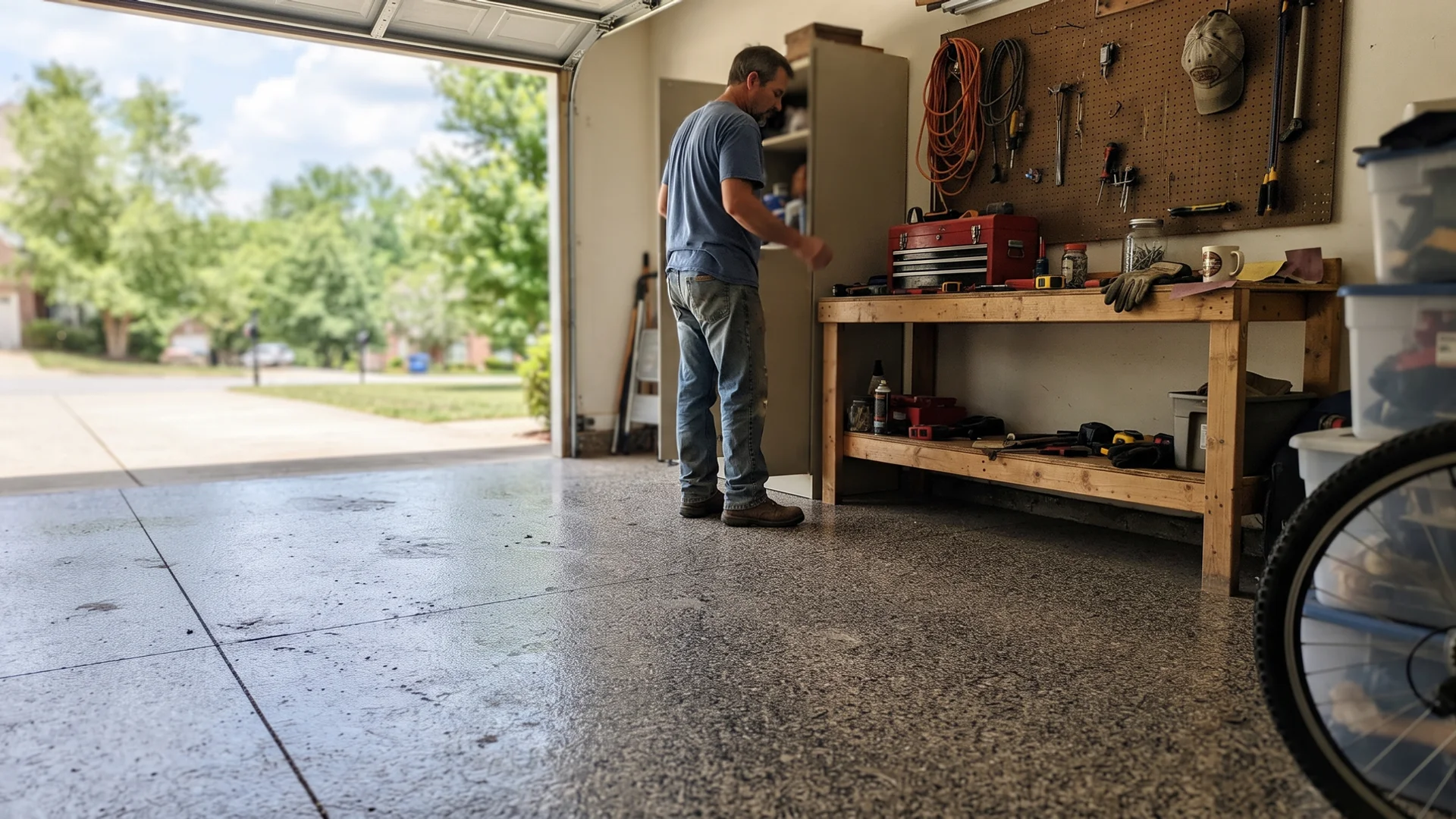
  • Retail and showroom floors. Reflectance makes the space feel bigger and brighter, and it handles heavy foot traffic without a maintenance programme. Our homeowner clients love replicating this exact premium look in their own display garages. A typical 400-square-foot residential garage costs between $2,000 and $4,000 to polish, offering a much better ten-year return on investment than peeling paint.
  • Modern open-plan homes. Especially over slab-on-grade construction where the concrete is already there and simply needs refining. Families appreciate that polished living spaces provide incredible relief for allergy sufferers. There are no carpet fibers to trap dust mites or pet dander.
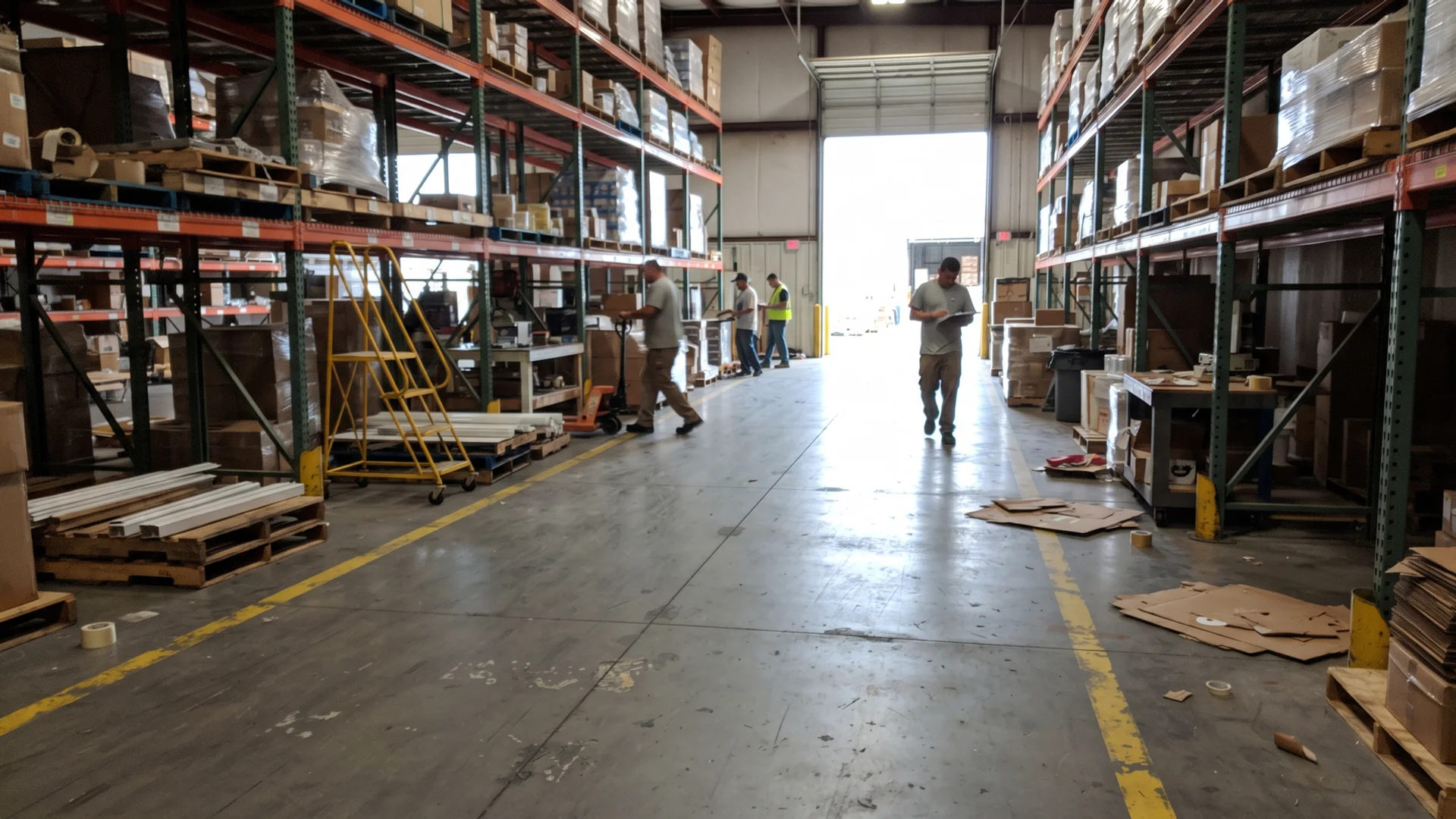
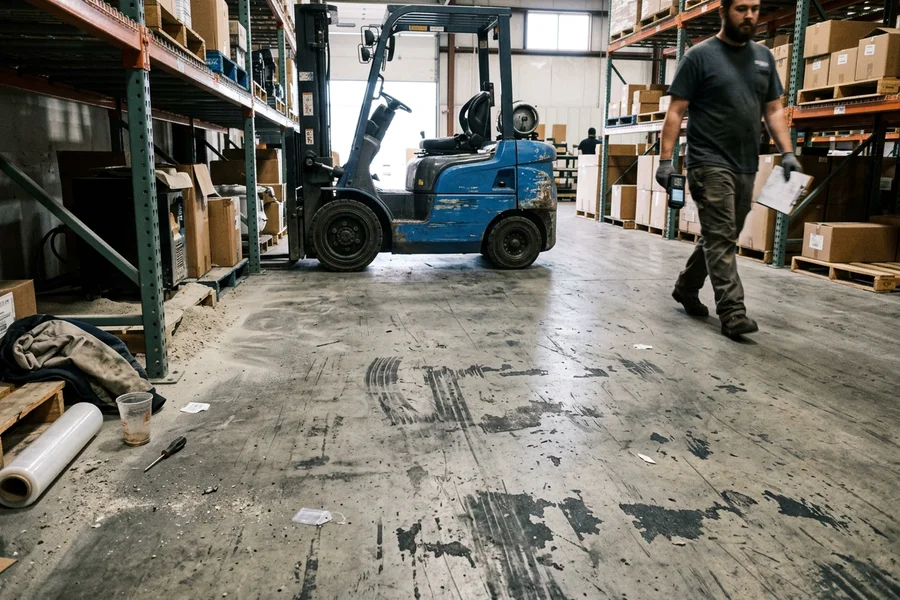
  • Warehouses and light industrial. A densified polished slab holds up to traffic and stops the constant dusting bare concrete produces. Our basement remodeling customers borrow this commercial benefit to fight “sweating slab syndrome.” The polishing process seals the concrete while remaining breathable, which prevents the damp, musty smells caused by trapped moisture under vinyl or laminate planks.
  • Cafes, breweries, and galleries. The industrial-honest look is part of the design brief, and the floor cleans down easily at the end of service. We bring this durable cafe vibe directly to outdoor covered patios and custom outdoor kitchens. You get a completely hydrophobic surface where spilled wine or barbecue grease simply wipes away.

Being Honest About Suitability

Polishing exposes exactly what is currently in your slab. Old patches, crack repairs, and colour variation from different concrete pours all stay visible, and no amount of polishing hides them.

Our assessment process always starts with a strict reality check. Soft slabs will not take a high gloss, and slabs where the aggregate sits too deep cannot give you an exposed-stone finish without cutting further than is sensible.

To ensure your floor is a perfect candidate, we test for three critical factors:

  • Surface Hardness: We determine your floor’s exact physical limits using the Mohs Hardness Scale. The concrete must score between a 6 and 7 to take a good polish, while anything below a 4 is completely unsuitable.
  • Compressive Strength: A standard US residential pour needs a minimum strength of 3,500 to 4,000 PSI to handle our heavy-duty planetary grinders.
  • Hidden Moisture: Sweating slabs require special mitigation before any densifier can properly cure.

We assess all of that before recommending polishing. If your concrete is not a good candidate, a coated system will give you a better result for the same money.

Our team would rather tell you that at the consultation than after the grinder has been running for a day.

“Transparency is the only way to build lasting customer relationships.”

Ready to find out if your floors are a good fit for concrete polishing? Reach out to schedule your free residential consultation today.
Transparent pricing

How Much Does Polished Concrete Cost?

Polishing runs $3 to $12 per square foot. Gloss level and how much aggregate you want exposed are the main drivers.

Satin (Level 1-2)

Low sheen, cream finish

$3-$6 / sq ft
per square foot
  • Progressive diamond grinding
  • Concrete densifier hardening
  • Cream or light salt-and-pepper exposure
  • Low-maintenance sealed surface
Get an exact price
Most popular

Semi-Gloss (Level 3)

The everyday commercial standard

$6-$9 / sq ft
per square foot
  • Everything in satin
  • Additional polishing passes
  • Consistent salt-and-pepper exposure
  • Noticeable light reflectance
Get an exact price

High-Gloss (Level 4)

Showroom mirror finish

$9-$12 / sq ft
per square foot
  • Everything in semi-gloss
  • Final burnished finish
  • Aggregate exposure to specification
  • Maximum reflectance and clarity
Get an exact price

What Moves the Price Up or Down

Factor Effect on your quote
Desired gloss level Each step up the gloss scale means more passes with finer diamonds
Aggregate exposure Cutting deeper to expose stone takes longer than a cream polish
Slab hardness Softer slabs need different diamond bonds and more densifier
Existing coatings Old paint, glue, or sealer must be removed before polishing starts
Crack and patch work Repairs are visible in a polished floor, so they are detailed carefully

Every price is confirmed after a free on-site look at your slab. Book a free consultation.

The difference

Why Choose Us for Polished Concrete?

Nothing to peel

There is no applied film on a polished floor. The finish is the concrete itself, refined, which means delamination simply is not a failure mode.

Genuinely low maintenance

Dust mop and an occasional damp mop with a neutral cleaner. No waxing, no stripping, no recoating cycle to budget for.

Dust-controlled grinding

Planetary grinders run under HEPA vacuum dust shrouds, which keeps the working area usable and the rest of the building clean.

Honest about your slab

Not every slab polishes well. If yours is soft, badly patched, or has aggregate sitting too deep, we will tell you before you spend money on it.

Great with natural light

A polished surface reflects daylight deep into open-plan spaces, which is why retail and modern homes keep choosing it.

Same crew, same standards

The grinding expertise that makes our epoxy floors bond is exactly what a good polish needs. It is the same equipment and the same people.

How Spring Hill Epoxy Compares

Feature Typical provider Spring Hill Epoxy
Surface Applied coating film The concrete itself, refined and densified
Failure mode Peeling, chipping, delamination No film to delaminate
Maintenance cycle Strip and recoat periodically Dust mop and neutral cleaner
Dust control during work Open grinding HEPA vacuum dust shrouds throughout
Suitability advice Every slab quoted the same Slab assessed before we recommend polishing
Step by step

How Our Polished Concrete Install Works

  1. 1

    Assess the slab

    We check hardness, flatness, existing coatings, and how much aggregate sits near the surface, then talk through realistic gloss levels and exposure for your concrete.

  2. 2

    Grind and open

    Metal-bond diamonds on a planetary grinder under a HEPA vacuum dust shroud remove coatings and flatten the slab, cutting to the exposure level you chose.

  3. 3

    Densify and harden

    A concrete densifier is applied to react with the slab chemistry and harden the surface from within, which is what makes the polish hold up to traffic.

  4. 4

    Polish and burnish

    Progressively finer resin-bond diamonds bring the surface up through the gloss levels, finishing with a burnished pass and a guard treatment for stain resistance.

See the Difference

Before: Polished Concrete transformation Before
Bare, stained slab as we found it.
After: Polished Concrete transformation After
Diamond-ground, coated, and topcoated.
Reviews

What Customers Say About Our Polished Concrete

5.0 out of 5 from 92+ reviews
"We wanted the concrete look without another coating to worry about. They were straight with us about what our slab could achieve and it turned out beautifully."
Ellen B.
Franklin
"Retail floor, polished over a long weekend, open Monday. Dust control was better than I expected given how much grinding was involved."
Marcus H.
Columbia
"Two years in and the only maintenance has been a dust mop. That was exactly the pitch and it turned out to be true."
Jonathan P.
Spring Hill
Got questions?

Polished Concrete FAQs

What is polished concrete?
It is your existing slab mechanically refined. Progressive diamond grinding cuts the surface flat and then progressively finer diamonds bring it to a gloss, with a concrete densifier applied along the way to harden it. No coating is applied on top.
How is it different from epoxy?
Epoxy adds a resin layer over the concrete. Polishing removes a thin layer and refines what is underneath. Epoxy gives you colour and chemical resistance; polishing gives you a coating-free surface that cannot peel.
What does polished concrete cost?
Generally $3 to $12 per square foot. A satin, cream-finish polish sits at the low end and a high-gloss burnished floor with full aggregate exposure at the top.
Can any concrete slab be polished?
No, and this is worth knowing before you spend money. Very soft slabs, heavily patched floors, and concrete where the aggregate sits too deep will not produce a good result. We assess yours before recommending it.
What are gloss levels?
A scale from matte through satin to high gloss, set by how many polishing passes and how fine a diamond grit you finish with. Level 1-2 is a soft satin, level 3 is the common commercial semi-gloss, and level 4 is a reflective showroom finish.
Is it slippery?
Dry polished concrete has a reasonable coefficient of friction, often better than polished stone or ceramic tile. Like any hard floor it is slick when wet, so entry mats matter in commercial settings.
How do I maintain it?
Dust mop regularly and damp mop with a pH-neutral cleaner. Avoid acidic products, which etch the surface. Depending on traffic, a re-burnish every few years brings the sheen back up.
Will cracks and patches still show?
Yes. Polishing highlights what is in the slab rather than hiding it, so old repairs and crack fills remain visible. Some clients treat that as character. If you want a uniform look, a coating is the better route.

Still have a question?

Call and talk to the crew that will actually be on your slab. We'll give you a straight answer.

(615) 908-2144
Now booking across Williamson, Maury & Davidson counties

Ready to Book Polished Concrete?

Free on-site consultation and a written price for your concrete polishing project.

Licensed & fully insured Transparent, itemised pricing Diamond-ground prep on every job
Free Quote